My latest novel is out on submission!
Remontada, the football book, has now been submitted by my fabulous agent Abi Fellows to a list of the most exciting editors working in publishing today.
If you’re an outsider to publishing you might wonder what is meant by those words in my title—‘out on submission.’ I thought I’d explain here.
But first, I should say what this means to me. I’m struggling to find the words. Well. I have a few. ‘Magic.’ ‘Quiet.’ ‘Excited.’ ‘Tender.’
Tender, like opened (I’m imagining a lily, stamens glorious, stigma rudely proud, moisture drops on waxy curving petals, anthers dusting pollen everywhere like cannons shooting glitter at a parade). Tender, like I have the courage to open again, and be raw, and wait, and see. Tender, like new.
Also, I want to be so, so quiet. Quiet so as not to disturb the universe as it works. Quiet because I wrote two books last year, and I can rest now (between emailing writers, booksellers, and all the many talented industry professionals I know for quotations, known in industry as, wait for it, it’s a gross word, ‘blurbs’, yeurgh, but nevertheless THANK YOU SO MUCH to everyone now reading and who has already… deep breath… ‘blurbed’.)
I’m so grateful and so glad to be back here. It wasn’t a given I would be. It feels really different. I know a lot now. I don’t think enough is said of one surprise of ageing which is that if you consistently learn and work and take chances and apply intellectual curiosity to your craft, sure enough, you become knowledgeable and grown and confident and suddenly more successful. And so do your friends! I became very confident about my writing a couple of years ago. I got to a point where I knew what I was doing and so I didn’t have to search anymore—I could just get on and do it.
I found my rhythm; that’s all. I experimented, practised, kept trying, and I found my rhythm.
But then you have to make aims and work towards them, and bizarrely I made an aim to get Arts Council funding, complete a draft of a book that would open a trilogy, send it to very clever friends for notes, redraft, use it to get an agent, discuss a strategy with that agent of first writing and submitting a shorter novel, about football and later in life queer awakenings and baby loss and recovery and love and bodies and what women are allowed to be, draft that novel in a month, get notes form the clever friends again, edit it in the following two, and submit it for the new year, alongside a note about the first book in the trilogy, which I would also reread and tweak during autumn, and then all those things happened.
Everything going well is … I’m not sure how to put it. After recurrent baby loss…
I know. I’ll continue like you know about attachment theory and have read the book Why Love Matters: How Affection Shapes a Baby’s Brain by Sue Gerhardt. I’m sorry if you haven’t. Needs must. Also, I don’t have it with me so I’m just going to bastardise an idea from it:
Human beings work on the basis of narratives (handy, if you’re a novelist). Narratives help us adapt to our circumstances. Terrible parents? Your narrative becomes “people are terrible, so I don’t expect too much.” Sad for you, but it helps you in the environment you live in as a child to not have too-high expectations and be disappointed all the time. Obviously, this is just an awful way to approach your adult relationships, and that’s why it’s in a book about attachment theory. The narratives we carry around with us matter.
But here’s the really interesting thing. We prefer to be proven right than proven wrong. It’s upsetting, to have your worldview questioned. To consider that you might have been approaching life in entirely the wrong way, possibly to your enormous detriment. To find out what you thought was down is up. It makes a person feel stupid and rudderless, journeying with their true north in flames. This is the case even when things work out better than our narrative. “Huh. That person wasn’t terrible. I don’t get it. Are they faking? What did they mean by that? Why are they so different from me? Why aren’t so positive? Did I ditch everyone I’ve ever loved because I see the world in a negative way? Oh my lord, what about Betty Sue from my hometown, the girl of my dreams???” Etcetera.
When I found out I’d got 30k of Arts Council England funding, I put the phone down and kept doing dishes, and then, a few minutes later, stopped doing dishes, found myself short of breath, and burst into tears. I just didn’t know what to think or how to respond in the moment because I was so unused to good news. It felt not real. Such a large proportion of the good things that happened to me were invented escapism that I found myself gently letting myself down by thinking, “But, remember, that’s not real.”
I’m not that bad anymore, but having a moment like this feels so special I’m savouring it like anyone who knows me knows I savour Tiramisu. And it feels odd. Like, what is this air that is also tiramisu?
Don’t get me wrong—I’m even more keen to be in the next moment, when we find out who will be publishing Remontada. But that’s out of my hands. Up to fate. Up to those extremely exciting editors. This (the above) was all I could do, and it’s done. I tried at something (getting a book out on submission) and achieved it. It’s wild to me. Which is a big theme of the book. Because it’s something you often think, when life has been hard—if I try and try and try and nothing works out, why try?
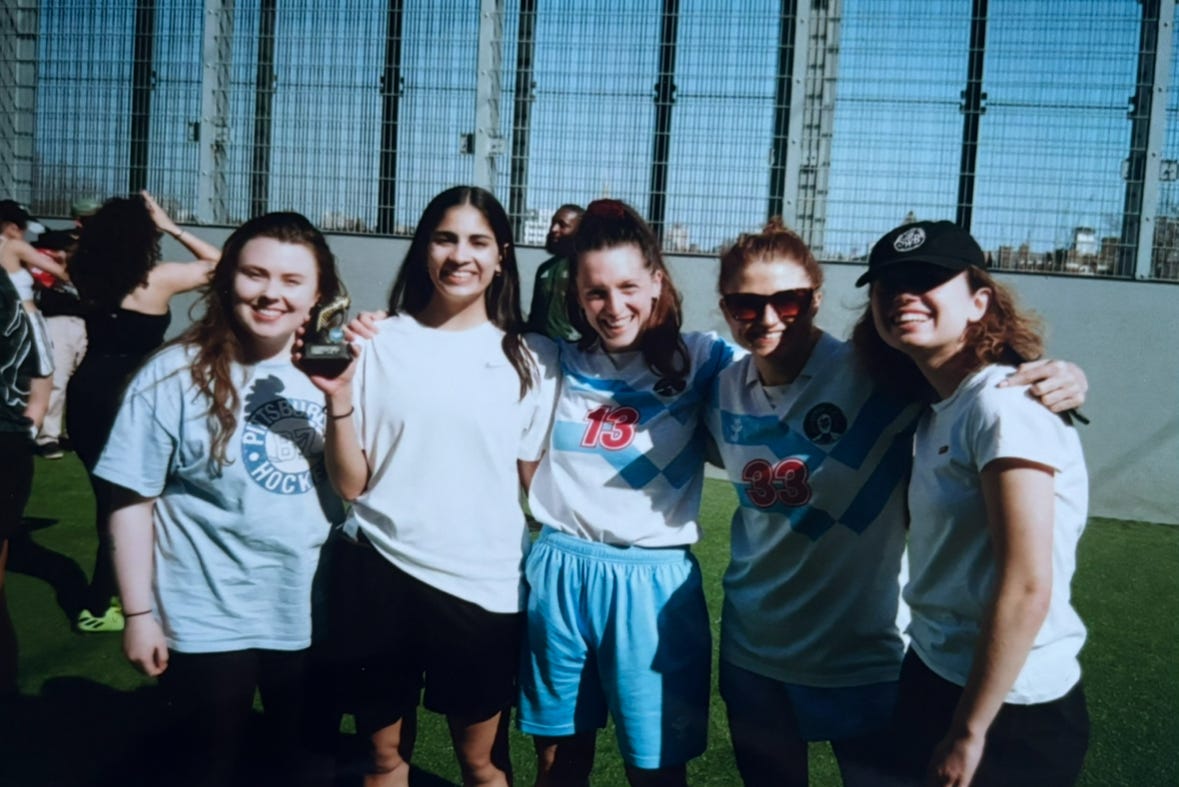
I’m so glad I tried and I have many people to thank for supporting me and bringing me joy whilst I was quietly preparing to poke my head above the parapet, grin gleefully, and call, “HEY GUYS, IT’S ME!” (The caps is just my natural exuberance, also evident in the photo below, with Judas and Deptford Ravens.)
So, what does being on submission mean?
Sometimes when you’re a novelist, you are writing a novel that is already under contract. This means a publisher has already put a downpayment on that work.
For instance, when I sold Golden Boy, I was offered, and accepted, a two-book deal in the UK so the novel after Golden Boy, which at that time was unwritten, was already part paid-for by said publisher.
There are pros and cons to having a two- or multi- book deal.
The most obvious pro is that you get the money up front, which might enable you to secure your future a little more at home—for instance, the publisher’s downpayment on your intellectual property might enable you to put a downpayment on a property.
One negative aspect is that, if your publisher doesn’t love your next novel, you may then spend some time going back and forth with one particular editor/publisher, rather than being able to show your novel to others, for whom it might be the perfect fit.
If you’re a novelist and your future work is not under contract to a publisher already, then typically you write the novel on spec (i.e. finish a whole novel before selling it), and then your agent (if you have one) will send it to a list of editors at publishing houses, for their consideration.
If you are new to the industry, your agent will create this list for you. I know the industry semi-well at this point, so I have an idea of which editors might particularly enjoy my work, and understand the audience it’s intended for.
Your agent will then write a pitch email and the best will give you an opportunity to read it and feedback, as you may have ideas for how to pitch yourself and what to say, too. This practice does differ between agents.
I wrote the synopsis that went in the pitch email for Golden Boy, but didn’t see the pitch email. My new agent, Abi, is brilliantly transparent; I’ve been really pleased to be able to see the pitch email, as it has given me the opportunity to suggest several things to mention about my work that may strengthen the pitch, that Abi couldn’t have known without me telling her.
The agent then sends this pitch to the list of editors, separately, with your manuscript attached. Those reading this and looking for an agent will be used to the practise of sending off the opening of the manuscript; at this stage, the agent submits the full manuscript, typically in PDF.
Hitting ‘send’ on that email is the equivalent of rolling the dice…
…and I love this gamble!!! It’s my jam! This is my industry! BOOKS! I’m so excited. I’m also quite comfortable with the risk and not at all nervous about this part. I think we’re all made for certain things and I feel like this is something I’m made for. I’m really happy with the book. I’ll tackle edits in the spring. I continue to send the novel out to other writers and booksellers. This is the delightful bit, the gamble, where people I admire get to read it. I also like poker, but that’s a story for another time.
Thank you for taking the time to read my writing. If you enjoyed this post, felt like it spoke to you in some way, please share it via the button below or leave a comment. I really appreciate the support and your continued readership.
Buy my novels from independent bookshops here.
Find me on Instagram.


Fingers crossed the editors really like it!