

March Reading
Indie cult debut on female loneliness, two Sally Rooneys

Normal People by Sally Rooney
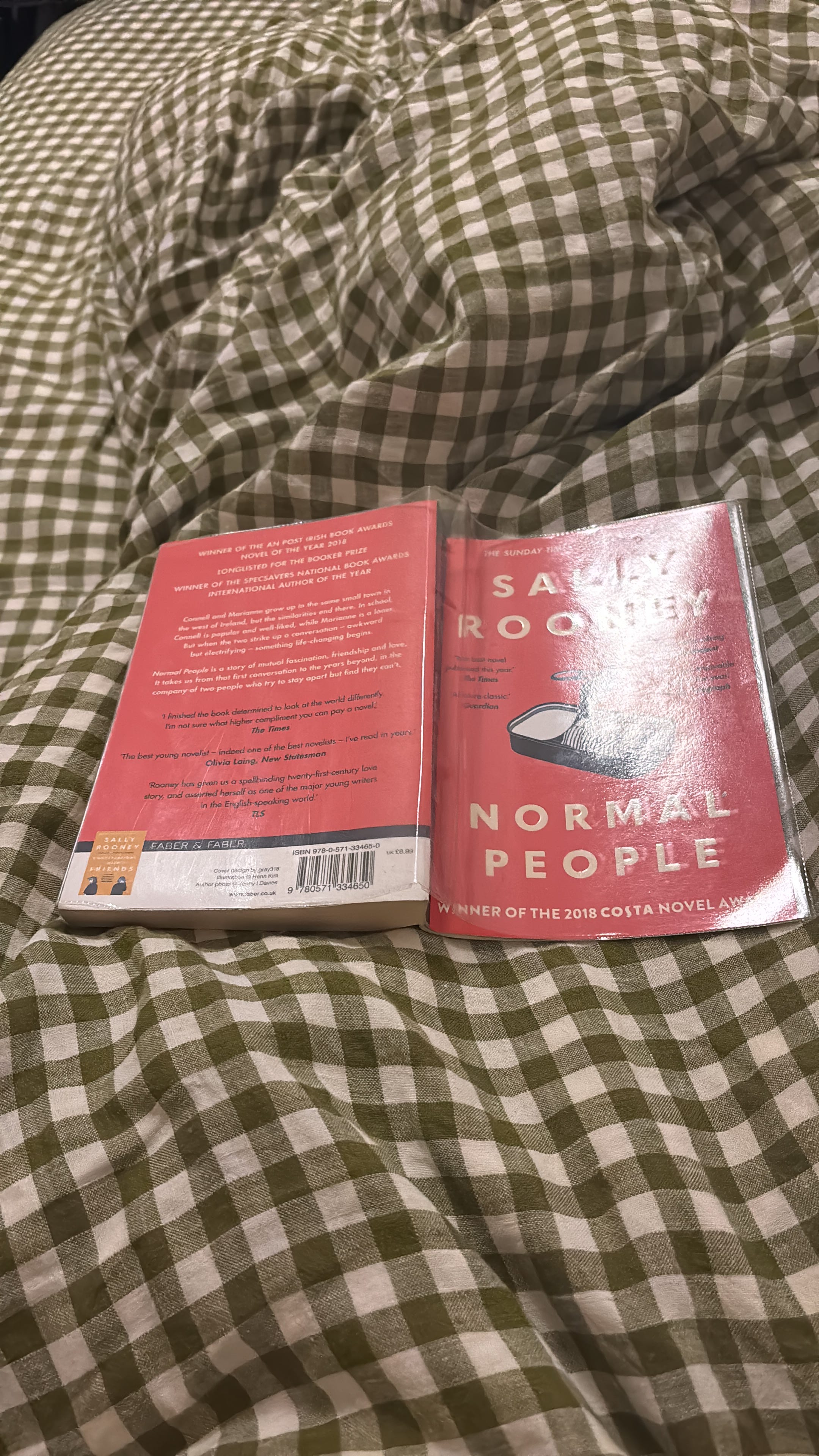
The highlight of this month’s reading is, perhaps embarrassingly?, obvious. I read Normal People by Sally Rooney for the first time, having committed the cardinal sin of watching the TV series first, a couple of years ago.
I enjoyed both the reading experience, with my “I’m just an innocent reader, nothing to see here” hat on, and, with my writer hat on, the wicked confidence of a young woman writing about what she knows, skilfully and, dare I say it, with artful calculation.
You can read my essay, which is not strictly an explanation or review of what happens in the book so much as musings on craft, third person, and writing intimacy from a distance (which I’ve just had another thought about—writing intimacy in the third person is a form of literary edging).
Buy the book here.
Beautiful World, Where Are You by Sally Rooney
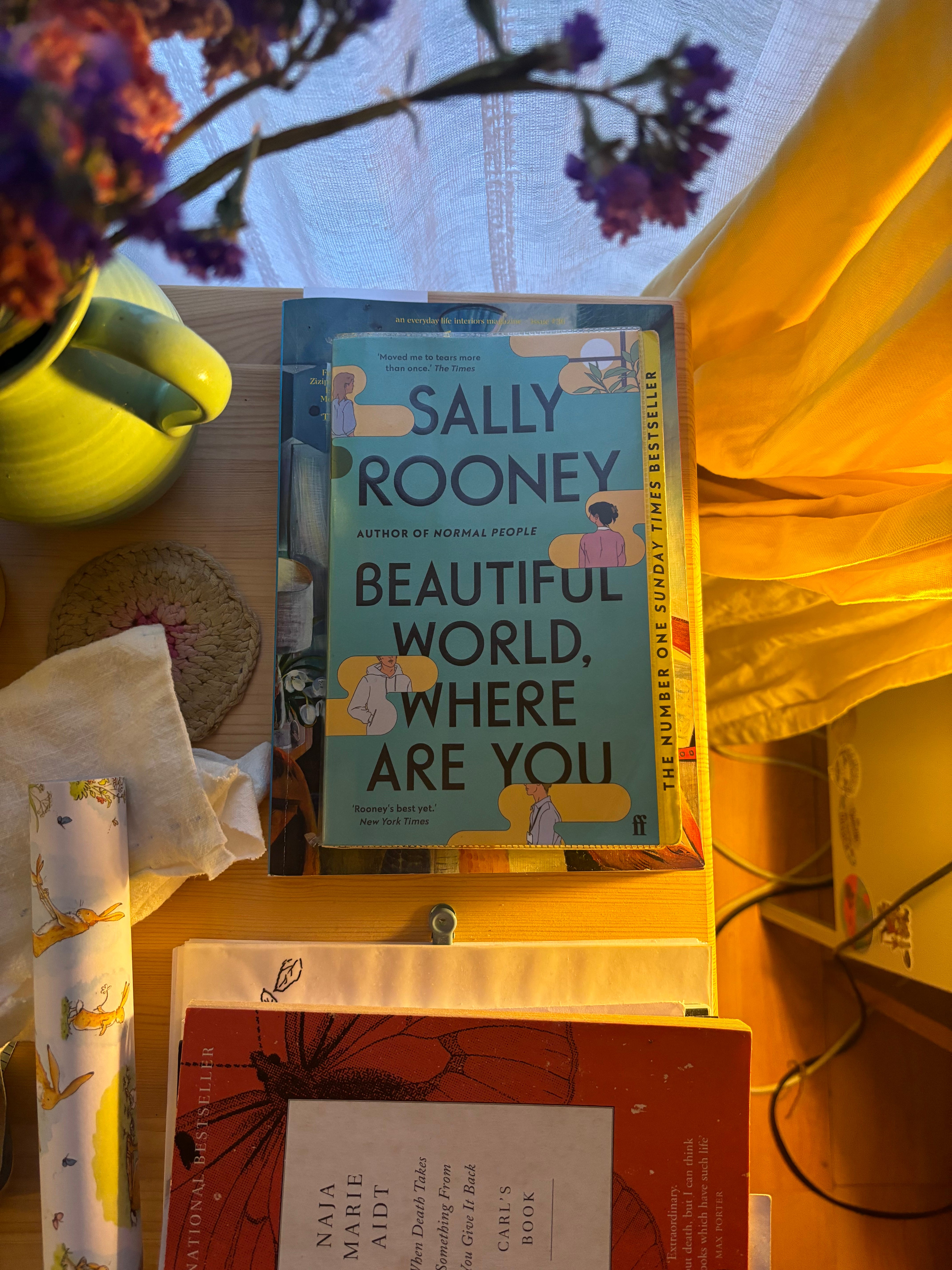
Whilst we’re on the topic, Sally Rooney’s follow up to Normal People, set amongst a similar milieu of middle to upper class educated Dubliners, but not with the same characters, also edges, literarily.
I didn’t think it worked as well. Ordinary World is twice as long as the international bestseller and has a looser structure, but hews to the same formula as NP, with two couples, this time, misunderstanding each other for chapters upon chapters.
The reasons for the misunderstandings—inherited traumas of one kind or another—are both less compelling than in NP and less clear. Particularly, the choice to reveal one character’s poor early life family dynamics later on in the narrative (in NP, we learn all is not well in Marianne’s household in the early parts of the book) leaves readers guessing as to the cause of characters’ reticence to attach for the first half of the book.
Beautiful World’s secondary flaw, in my opinion, is that the cast are 30 to 35, so I just ended up thinking, oh for god’s sake, tell them you like them, be happy, and split rent, because otherwise it’s hubris and I don’t feel sorry for any of you at all.
It’s difficult to read that kind of book when one has real problems, and when it should be achingly clear that one’s handsome, clever, left wing best friend telling you that he really likes you, and you being a touch too tired to repress all emotion about it, is not a real problem. Eileen, particularly, encounters this level of trauma repeatedly.
BW was published in 2021, and so Sally Rooney was 30 years old when drafting it, or younger. I glean from the internet that Rooney last began a romantic relationship age 20/21, with the man she then married at 29/30. Barring polyamory/ENM (I don’t want to assume), that could mean her experience of romance is frozen in this era of early 20s, and provide an explanation for the recurring ‘mutual confusion’ storyline in her work.
But is she writing about herself? Maybe, and maybe not—is the objective voice evidence that this pattern of relationship is observation rather than experience? Olivia Sudjic’s Exposure, amongst others, questions a societal tendency to see women writers in their fiction, and not men.
Personally, knowing certain facts about a writers’ life helps me better analyse and enjoy their work. Are they from immense privilege for instance? Does that affect their world view and story? Of course it does. Why not address their humanity, when novels are so much more about our humanity, our hearts, than words?
Rooney, too, questions novelists’ motives and perspective in BW.
Alice, one of the novel’s four protagonists and three narrators (in that epistolary parts of the novel are written between Alice and Eileen; the rest of the book is in the third person), is a novelist, with a backstory that closely resembles the wild success of Rooney’s own career. In letters to Eileen, Alice discusses her own circumstances, that her writing focuses on romantic relationships, and whether her novels add anything to the cultural dialogue.
Here, Rooney offers readers her self-consciousness, but what does that self-consciousness offer the reader? Confession alone? Complicity, if we accept the confession? Is it okay for Alice/Rooney to write entire novels about people getting together or not, as wars rage, as long as we know that she is self-conscious, demure, a little apologetic? Does Alice/Rooney think so?
Honestly, I’m uninterested in this debate. Having experienced great loss, I know gentle entertainment of any kind can make life worth living when other reasons are hard to come by. People who escape wars need books to distract them, to relate to, to write. This dialogue undermines the novel for me, and breaks the fourth wall, as if the author is rejecting the book as she writes it.
I do, however, enjoy Rooney’s writing. There’s something very interesting about the distance with which she writes, and how she lingers on what modern life is—the dust motes and the powering down laptop noise of it all. Also, I like her illustrations of the ways money divides people and creates our divergent quotidians—how some of us go to work and come home to grey silence, some of us live in beautiful places and don’t work too hard, and some of our hands bleed from labour and we feel bereft and desolate that this is what we are and do.
But does she believe in her own writing? By Beautiful World, it feels to me like the bloom is coming off the rose—for Rooney, not her readers. She is unimpressed with herself, and even these casual little descriptions (the dust motes) feel too light, too careless, and the dialogue between women about the pointlessness of writing about the minutiae of relationships is… too on the nose to say anything further about.
Like the lauded debut crime fiction from last month’s book stack, this book was loved, and recommended to me, by one of my very best friends, both wonderful, unique, very clever women, with excellent taste. I, however, found some good things in the crime debut and in this book, and then ended up speed-reading the two last halves.
But I’m trying to embrace having different tastes and not worrying that I’m a curmudgeon. I do think it’s worth talking about what we don’t like as much as what we like. I always feel bad, that I might be hurting the author’s feelings (or alienating friends) but just as, in writing my own novels, I try to satisfy myself, I would sincerely hope that Rooney doesn’t care what I think.
Buy it here.
Female Loneliness Epidemic by Danielle Cheloskey
“I wanted to be digital and controlled by someone realer and bigger than me.”
I’m currently employed for two days a week as a development exec with literary heft for a director; specialising in intellectual property, finding her books that are cool and cult and contained enough to adapt structurally and visually for cinema, and suit her style, voice, and previous body of work.
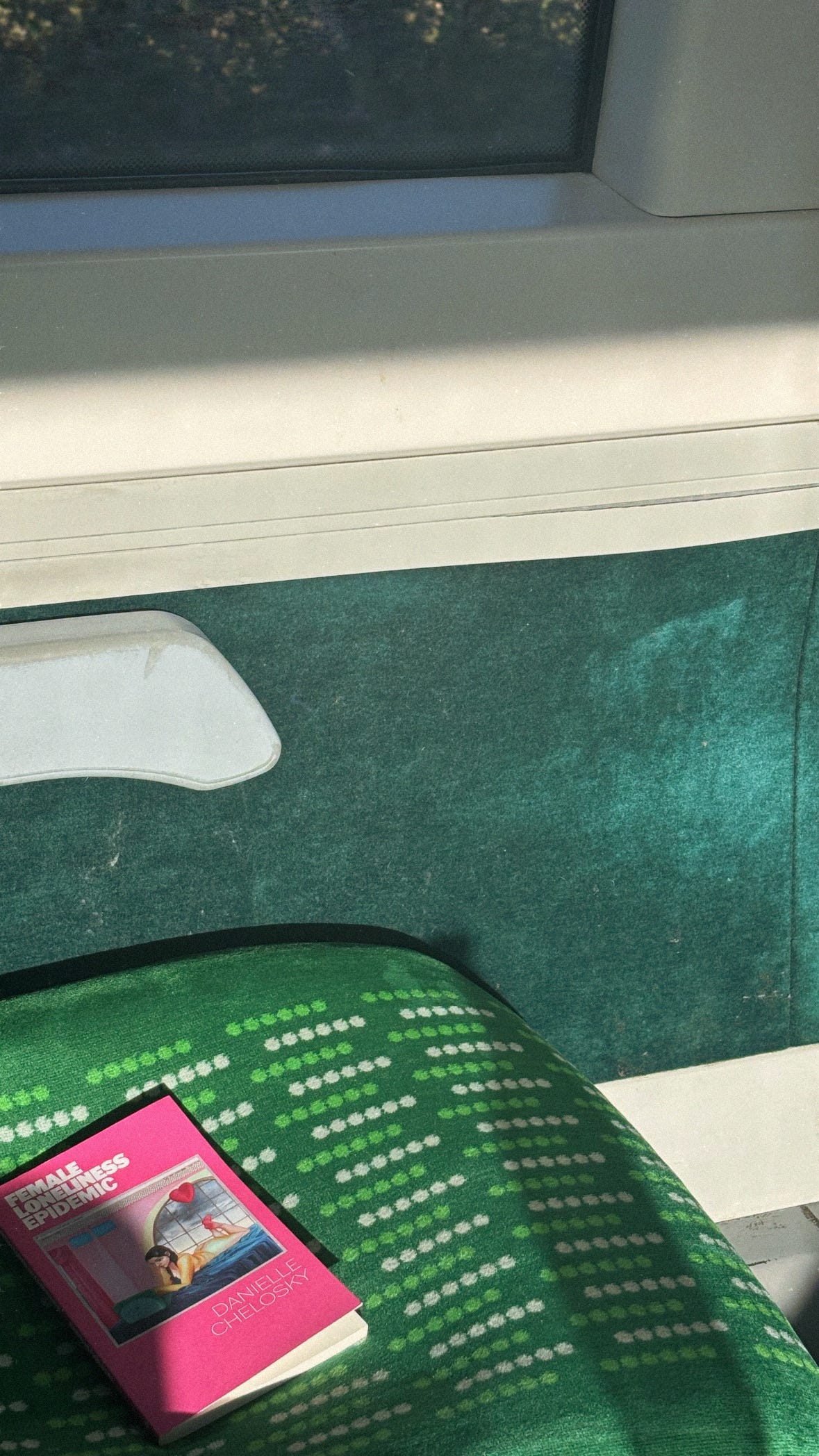
So this reading was for research. I picked it up at Artwords on Broadway market. I selected it because of the title and my impression that the stories in it built a kind of a thesis, each compounding the casual tragedy of the last, declaring: today’s young women are lonely because of today’s young men.
I was reading it on the train, when the woman next to me (19-24) asked about it, and whether I’d seen the Louis Theroux documentary on masculinity. We spoke about her impressions, and she confirmed other reports I’d heard that it was depressing viewing for a young woman, given how little it went into the topic and how basic the information was, and how it made one think, doesn’t everybody know this already? Exactly my thoughts during me too.
Back to FLE. The stories reminded me of Lucia Berlin’s collections, in that the narrators all feel like one protagonist, in mildly different professions and timeframes. Each first person protagonist goes unnamed, each is a woman circa mid-20s. She has casual sex or relationships with many men who don’t care about her, feels unhappy, and contemplates suicide. She is (at times) an artist, but we don’t learn much about this.
During the first half of the book, I had my misgivings. I surmised it probably accomplished what it aimed to achieve, but what didn’t work for me is that it didn’t feel like it said anything new. The structure of the two or three page stories, mostly interior thoughts and sex acts, was plain and unchanging, with her unhappiness rooted in the pursuit of aims highly valued by straight culture—to get a boyfriend, to be wanted, to be seen as “pretty” in a particular way, to be thin.
There was something about it that felt old fashioned, because I think some women have come to understand that being with a man might either be just one facet of a wider, fuller, fulfilled life or, even, less than they should reasonably aim for. There’s the South Korean 4BB movement, in which women followers do not date men, marry men, have sex with men, or have children with men. There’s my lived experience—in two out of three dates I go on with women, they tell me they’ve recently stopped dating men.
But FLE grew on me. The second half of the book slowed down a little, the stories lengthening, with more space on the page to understand her days, the economic pressures, the overwhelm of New York City, the tenderness she notices that others don’t.
I think my empathy for the book ebbed and flowed with my empathy for the character. I thought, could it be that the original thesis changes, that instead of loneliness being pinned on poor treatment by men, the writer concludes that today’s young women are lonely because of themselves? Or, is she saying that it’s the city, modern life, the lack of time to think, the ugliness of American capitalism?
I felt the character wanted to become, and was searching for herself in men. Strangely, the last three stories were in the third person—what is the writer doing with this? I felt like the final story, Bodies, is the same character a year or two on. She’s found purchase in the city. She’s turned herself from a muse for men into an artist. She’s rendered versions of herself on canvas and let those younger versions go. A young woman points at a painting. “That’s me.”
Is she saying, if only we could let go of the patriarchal dream of a man to provide the other half of everything, we could make good feelings, good art, instead of making bad feelings? That maybe we could find love, tenderness (the tenderness with which Esme seems to regard this young woman in the art gallery), in the forms it arrives to us, rather than the forms we expect it in.
Buy it here. Note the long dispatch time.
March in conclusion
I love to be drawn by whim when choosing what to read, but I also need focus. If excited about a new hardback, I should get it, as soon as it comes out (like you can, from independent bookshops, at this link, supporting me at the same time, at no extra cost to you). If I want to read the precursor to my Christmas classic, and I put it on my bedside table, it shouldn’t linger there for three months waiting for me to whittle through whimsical acquisitions.
Too many times this month, I found myself speed reading because I had realised I wasn’t enjoying myself. I don’t like to do that, because I like reading—and food, life, a desk set up, an hour, a nap, etcetera—to be truly delicious; hedonistic, orgasmic, an utter delight. Definitely reading novels should be, because we read fiction for pleasure, more than we read it to know things.
Also, when I read fiction that brings me joy, I write work that is true to me. Good books, like To the Moon and Back by Eliana Ramage, and Deep Cuts by Holly Brickley, inform my work.
I could be avoiding this error, because sometimes my whims are like going to the supermarket hungry—I know in the moment when a book is not going to hit the spot, but I buy it anyway.
I’m now doing three things which I think will help—using the library, planning my reading (a current focus is reading certain authors’ entire oeuvres), and buying the new hardback I am so excited to read. I’m doing one thing that will hinder me, which is reading at least three books for podcast and film work this coming month. Damn it. I’ll just have to read more.
Buy my novels, Flick, Golden Boy, and Dead Girls, from indie bookshops here.
Links to buy novels in this essay:
Normal People by Sally Rooney
Beautiful World, Where are you by Sally Rooney
Female Loneliness Epidemic by Danielle Chelosky
To the Moon and Back by Eliana Ramage
Deep Cuts by Holly Brickley
Every sale supports both independent bookshops and my work, as I earn commission on them at no extra cost to you. This is true, too, of all books linked in the body of this article.
If you liked this, you might like…
February Reading

Is anybody else experiencing a reading slump at this time of year? Winter is such a treat for reading, but then after the holidays and with the lack of light, to both be writing and reading all day makes me feel somewhat restless.
The Sheer Confidence of Sally Rooney

I finally read Normal People. It’s been out eight years. Embarrassing, right? Everyone has not only read it but, also, says their new book is like it. Well, I’m a snob and a half. If everyone likes something, you can be sure I’m going to wriggle and claw at you, like a cat that doesn’t want to be picked up, before reading it.
Thank you for taking the time to read my writing. If you enjoyed this post, felt like it spoke to you in some way, please share, like, or leave a comment. I really appreciate the support and your continued readership.
Find me on Instagram.