

Fiction #6, speculative / dystopian
The opening of a novel

Have you ever written under a pseudonym? This is set in a dark future Britain, and if I finished the novel, it would be published under a different name. Something I’ve found difficult about writing for a living is that you can’t pinball all over the place in terms of genre or theme.
One valuable lesson I have learnt over my time in the industry, and my five years out, is that success in publishing novels is above all determined by consistency. No publisher—and this is very understandable—will invest in growing a writer’s audience if they don’t trust that writer to respect and retain that audience with their next work.
If writing is purely a hobby—pinball away! If one cares about repeatedly getting published, it’s necessary to repeatedly target the same audience. Or, use a pseudonym, which I would absolutely consider—after all, I love writing, and I also love a time-limited challenge, so separating my time between two different novel projects, say, over a year, suits me.
Onto the text. If you’re into speculative dystopian fiction, this one is for you.
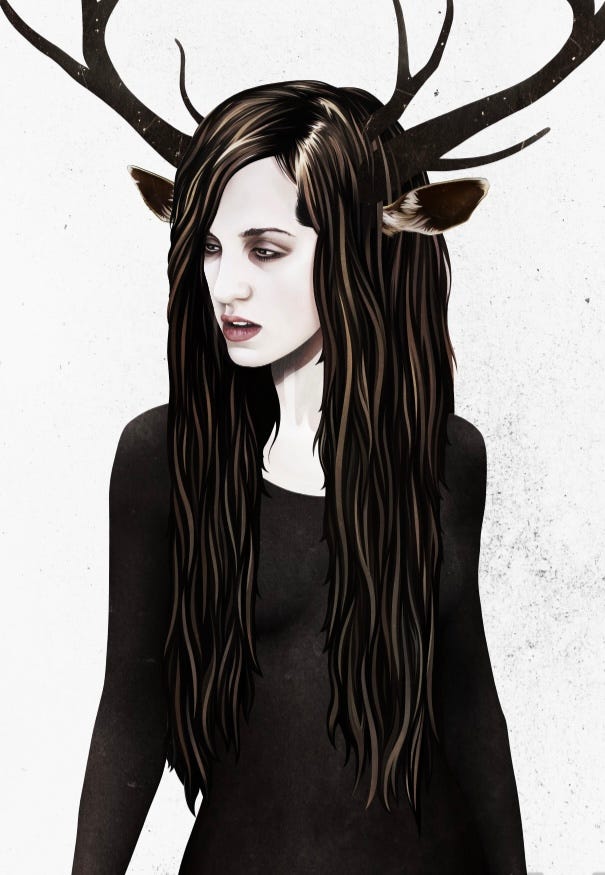
Terry’s Prologue
White winds ran across the land, taking the dust off farmer’s dead fields. Rain drowned ice sheets. Sea water surged through streets, destroying houses built on river banks and flood plains. Towns disappeared under water. People lost their money. They got sick and died. Their kids got sick and died. There was a nuclear incident, a cutting off from the mainland, and then the rich left and the poor had to stay. We got poorer. The teeth rotted out of hollow faces. Now there’s something going on with the government. It’s all falling apart. All day in the factory, the whole neighborhood, the whole town, builds this junk; these plastic phone parts. My hands move like the drowning tread water, fast and constant; I think about her, and wonder how she’s doing.
BIRTH
May
I can see his house from here. Can almost smell the deodorant. Teen boy deodorant. Deodorant mingling with post-pubescent sweat. Deodorant and beans he heated on the stove for me, his Adam’s apple bobbing with his nervous swallow. Deodorant and the hot taste of his hidden parts. It had one of those teen-boy-deodorant-y names, like “Power” or “Truth” or “Freedom”.
Funny. We never had any of those things, but we learned their names from aerosol cans.
I bet he’s still there, in that tiny, terraced house, built for workers back when there was work. Ten to one, he’s lying on that single bed with the blue coverlet, daydreaming.
But, no. I’m thinking of a teenager. That was a long time ago.
From the disused bandstand, through the canopy’s draping branches, I spy on the grey town in the valley below and the blue sea beyond it. Leaves whisper in a light wind. Soft purrs and clucks of wood mammals and insects and birds tell the time, almost twilight.
Low sunlight lands on red-brick houses, on broken windows of abandoned dock warehouses, on a strange, vast cement building where the Victorian town hall used to be; a grey cuboid dropped on Town Hall Square. Long green entrails are wrapped around and over rooftops, burrowing under tiles, bursting through rafters, corroding pipes; turning darker, as birds nesting in them whistle out quick lullabies. I think I can make out the shape of ornamental ivy, dog roses, honeysuckle; the colors of orange Black-eyed Susans, lilac potato vines, the lively pink of bougainvillea, fading to grey in the dusk. A herd of wild bison drift slowly through a suburb.
I lie down on the warm brick. I can hear a wolf pack nearby, howling to each other. Trusting the trees, the night, the woods, the wolves, I close my eyes.
It was just after the Children’s Pandemic, when we became good friends. Dad had been moved to a smaller house, after Mum left, and the house was down his street. At first, I had all the little kids to look after, and then I didn’t. I was alone, as I have been since. Noah spoke to me first. Well. No words, exactly. A thrusting behind the shuttered library, and some tweaking of nipples. I got mine. I had that kind of confidence then.
Noah and Terry and Frank and Leila and Sammi hung out together because they had lived on our street since it was desirable, since houses were bought instead of moved into with the locks kicked off. I think they had had some younger friends, but they died. The CP took anyone under ten. The adults were really upset, but the kids weren’t. We were survivors. Thought we were hard, fought over who had cried the least. It amazing how the brain makes the worst things seem okay, as if really they weren’t the worst things. That’s how we started to think, like, life was shit and what did you expect? Don’t be a pussy. Get your head out the clouds. We used to call the lefties that came round with food for us while our parents were out working “Dreamers” “Silly Libs” “Babies” because they used to cry sometimes when they saw us, skinny and waiting for the undertakers to come carry away a dead brother or two laid out on the kitchen table.
Obviously, it sinks in. Maybe that’s not obvious, to you. But it sinks in with the years. You sort of settle back into your body, and find it full of grief and a breath you held a decade ago for someone who was here on Earth for less time than it’s taken you to miss them.
It’s not unusual now to see people my age suddenly weeping at bus stops, or in the queue for the loo at a camp. Feelings surprise them, these adults who were once kids that didn’t care. Nobody comforts them, but you can’t blame us. Comfort’s also a brand to me. Toilet paper.
Of the six of us, the girls were harder. Leila had been the first to join the Fascists. She wasn’t white, but they took her, because she was so zealous and cruel. She used to stand on the corner with them, flipping her Swiss Army knife around in the air and catching it without looking. Beside her, the lads would be writing earnest graffiti about how they hated everyone. “Immigrants are cunts” “the Poles are cunts” “the cunts took my job”, etcetera. None of them had ever had a job. They weren’t old enough.
Sammi used to nick things with her older brother, before he was shot in a demo. He was an anarchist. Into smashing the state. The anarchists were all boys; no girls among them, not even Sammi. They were too crazy. Teenage boys discovering their physical strength, wanting to fight, excited about maybe coming back with a scar on their face. The demo had started peacefully. A woman had been strangled to death by her police officer boyfriend, and the lefties were there first, holding candles and signs about defunding the police outside Town Hall. The anarchy lads swarmed, filled the streets, threw Molotovs.
“Don’t you fucking dare go,” Sammi had yelled. Noah, Frank, Terry, me, chewing gum on someone’s low garden wall, watching. None of us had phones. This was after the inflation madness and before they started handing them out for free. So we played games outside or hung around and watched drama unfolding in the street.
“He killed her Sammi, he fucking killed her!” Her brother was a good-looking lad. Tall, clear skin. Deep brown eyes. Shoulder-length dreads and pillowy lips. “You should care. You should all fucking care!” He turned and met our eyes and we all got busy, looked off into the sky, picked our nails.
None of us were fans of the police. But they had stopped Sammi’s boyfriend when he chased her in his van and taken away Frank’s mum’s partner when he wouldn’t leave. They didn’t bother the Fascists when they were dealing weed. Those were the things we wanted then. To relax and to hate things in an abstract way and for someone to haul away the angry men that made our lives worse.
In the end, it didn’t matter that we didn’t go. After the demo, where the police had opened fire, the government decided they were too much hassle and replaced them with the Army. Sammi loved the Army, who were friends with the Fascists. The girl soldiers wore chic little cherry berets and handed out sandwiches. We all loved sandwiches. Sammi joined up shortly before I left, along with Frank, who had always gone along with what everyone else was doing.
I had a soft spot for Noah. We had sex with a few times. I think he wanted to be my boyfriend but didn’t want to seem like he wanted to be my boyfriend. He never asked, but I would have said no.
It was Terry I always loved.
A pigeon calls. I open my eyes to starlight, sighing. A reply arrives, fainter, from near the beach. Each a short call, followed by a trembling sentence. A Wood Pigeon and its lover.
I cup my hands to my mouth. Hu-hoo. Hu-hoo-hoo. Hu-hoo-hoo.
Not exactly the same. My call is deeper than theirs.
The Milky Way is bright tonight, in a way it never was when I was a child. My favourite constellation is Orion. He follows me wherever I go. I look at the middle star of his belt, where ancient civilizations thought gods came from. I can imagine it. There’s a lot in my world, but few things that can’t be turned over and touched and reckoned with. Who knows what other people are out there, living lives, oblivious to our small problems. Perhaps they will reach this planet one day, when the particles that make up my body have parted and collected elsewhere to build other things, when this civilization is over, like the many that have gone before it and were then tourist attractions and are now abandoned in a quiet Europe that no longer thrums with throttle sounds or hums with electricity, only with the sound of workers headed to factories and back and to factories and back.
I shift onto my side, making a space between my knees and chest. I slip my arm around nothing, imagining.
There was a game we used to play here, in the open space in front of the bandstand, before the line of trees where the hill drops sharply away. We juggled glass bottles—we always collected them, for the money you could get if you took them into the newsagents—and then one of us would yell UP and whatever you were holding had to be thrown into the air, as high as it could go. We had been playing it for years and by the time we were fourteen we could throw the bottles as high as the treetops. The trick was to get your bottle up into the sky in a perfectly straight line, so it came right down to where you were standing, ready to catch it, but the fun of the game was to dodge the falling bottles. You had to have a good eye to spot the transparent glass in the grey sky, throw it high enough to give yourself time to move; you had to have spatial awareness to make sure you were standing either ready to catch a bottle or between them all so you didn’t get hit, and speed, to get out of the way in time. If that all failed you had to have enough wits about you to have your arms or jacket above your head and the strength of character to live with the welts on the bones of your wrists, which would last a week at least. We had so many games like that. Madcap games. Mean games. Pinching games and dare games.
After the schools closed and the jobs dried up, we went to the woods. First to play, and then, to live. Leila, Sammi, Frank, Noah, Terry, and I, together. I can’t say why. It might have been practical, a way to get away from our parents’ sadness. But I don’t know. The woods seemed to make sense in a way urban life didn’t. There was a rhythm to the wilderness that was missing from what was happening in town. Each dead rabbit was replaced by another rabbit. The chill of winter begat the warmth of spring. And sure enough, as towns and cities fell apart, that rhythm continued.
With my cheek on the bandstand cement, I watch our teenaged ghosts laugh and shove each other in the way of falling glass. Who came up with that game? I can’t remember a time I didn’t play it. Kids everywhere of our generation were like us, tough and unsupervised, hanging out in grave yards or waste lands or woods, making up fun, fucking, learning about survival. I can’t lie. It was fun. It felt like fun, at the time.
With another sigh, I stretch my body out, feeling the tendons, the muscles on the backs of my legs, and then I swing myself upright, and hop off the bandstand.
The night sky is a deep, clear blue. The line of the galaxy and the half-Moon bright. I don’t need to squint to find my way through the undergrowth, half-sliding, half-walking down the sharp drop, which isn’t a cliff, but a steep slope of tree roots and soil. I grab at grass and set my soles in sideways, stopping once to pick Bramble leaves, stuffing them in my pockets for a tea in the morning, and a second time, to eat all the softest fruit off a wild strawberry patch.
I pace, pace, excited.
Now I’m in a meadow, that used to be farmland. Moths tickle my forearms and reeds tower over me. Crickets sing so loud my ears are full. A new river has burst the man-made banks that channeled it away from people and taken up the path of the old river, winding through the meadow. A mallard quacks sleepily. This is what I have watched happen in many places. After the maintenance stops, things go back to the way they used to be, rivers finding the lowest point, where farms and villages were, and not caring.
I shy away from the field where the bison sleep. They are a recent addition to the landscape here. European Bison, once native, a longer-legged version of the American buffalo. They were reintroduced down south, on a nature reserve, back when nature reserves were managed. When the cars stopped running, the grass grew over the roads. Last year the Bison lumbered up the A1, the main arterial road north. I saw them once, watched them from the roadside. They were graceful, but their shoulders reminded me of bulky “Big Man” types who loiter around town centers, spill out of pubs, grab at passing women, haul my sleeping body from the sidewalk to show their dominance with a grope of their stubby fingers. I hung back, in the shadow of the tree line, waiting for one of them to charge, show a clapped-out car who’s boss.
The bison didn’t go all the way north. Here, at the edge of the sea, where the climate is warmest and driest, they stopped. They browse soft shoots in the un-tempered hedgerows of meadows where once crops grew, molt their soft fur onto heather and tufted grasses, cavort and lamb in the fens where the water is abundant. I can’t see them, but I hear their breathing, almost feel the heat spilling out of their enormous bodies. I whip by, running to meet the road.
My feet slap tarmac, loud after the tall meadow grasses. In the suburbs, everything has changed. Obvious that it would. It’s been fifteen years. The houses here, detached, set back from the road, are abandoned. I spy the white flanks of goats sleeping in once-tidy gardens. Plum trees with cracked, bare arms, leant upon and coiled around by Brambles and Elder, lean to touch the overgrown grass. A fledgling blackbird roosts on the handle of a rusted lawn mower, half-hidden beneath a crab apple tree, bushy head tucked into a shoulder. The streetlights are out. Better for the birds. Artificial light suppresses their circadian rhythms. I pass the chain-link fence of an old school, Hawthorn wildly leaping over it. Further, further into the suburbs. Now the houses are semis, identical, Edwardian, mock-Tudor. The first set of traffic lights, still running on some state electric line, perhaps more expensive to disconnect than to leave on. I stand in the middle of the empty junction and watch them blink green to amber to red. I breathe in the night. Look left and right down the empty roads. Grass, in electric green, orange, then red, bursts from the verge. Broken tarmac, potholed and patched, recedes into darkness.
The trees thin out. Birds and squirrels can’t bury acorns and chestnuts in impenetrable concrete and tarmac. Instead, weeds shoot up through the paving slabs, although I think it’s mean to call them weeds, to imply that they are “weedy”, these hardy plants that fly far from their parents and thrive in the least-caring of places. On, on, past a bus stop. Now rows of Victorian terraces, the kind that we lived in, the layouts all the same, so I can think, “I fucked Terry in that window”, “I ate Terry’s dad’s fish and chips in that kitchen”. This is quite fun; this trip down memory lane. If I suppress the panic at being near people, if I do it in the dark, when they are unsuspecting. Still, I’m almost at a jog, heart beating fast, eyes on the look out for a tall frame leaning in a doorway, the red flare of a lit cigarette end. As I reach the center of town the Victorian terraces become pebble-dashed and more run-down, but inhabited. Almost all of them are inhabited. A dog barks at me, chain around its neck. Curtains are drawn. Doors closed. The locks often replaced, bare wood around them, the rest of the doors in flaking paint.
Just before the high street, the houses give way to a church. In the churchyard, the graves seem dark, emptied pits, but as one moves I realize there are people sleeping on them, wrapped in dark sleeping bags. There is a soft, flickering light coming from the entrance. I steal behind a tree to watch. A woman sits on a bench in the vestibule. Candles decorate the wall behind her, emitting the light. She is dressed ordinarily, in slim trousers, a thin jumper, flats. Cropped, silver hair. She looks peaceful, at ease, as if she is waiting to enter a shop. As if she belongs to another time. Suddenly she turns her head and stands and leans over the candles, revealing a box of matches in her right hand. She strikes a match and relights the wick of a candle. She sits down again, almost smiling. I wonder what she is thinking. I wonder what other people think all the time.
Terraced houses again, except no gardens, and the frontage is different on the first story, all clothing stores and coffee shops and restaurants. In the dark, I can imagine them open, rich people wandering in and out. I imagine my mum as I saw her in photos on her old computer, gold jewelry and thin tattoos and a happy smirk, carrying a coffee in a tiny, lidded cup the size of her hand. I step over the glass from their windows, pretending I am striding out of them, knowing what their cuisines taste like.
“An-huh dowww,” I read off a sign, then clutch my chest at the sound of my voice and swing my head around anxiously. No one. But go. Go, go, go.
I mouth other signs, hearing the sounds in my head. “Six-hillsss ak-a-tics. A-and-D car-pets and vin-ills. Caa-law shop. Pizz-ah and keh-bab. Fruk-toh-lin-ka. Lad-brokes. The nyew gol-den brid-guh.” Terry liked reading. I used to tease him about it, and it was one of my favorite things about him. That may seem like two opposite thoughts, but sometimes that’s how the truth is.
Another junction, larger this time. “Woh-men’s a-i-d,” on the corner. In the near distance I can see the dock. It’s quiet, boat-less, walkways and the dock itself under water, but a lone warehouse and the long, black column of the dock tower pierce the shallows and rise to break up the sky. I look down, to the road. Corporation Bridge is submerged. The road rises out of the water, but I can’t see it. The sandbags are stacked high. Mid-way up, their color darkens. I wonder how long it will be before another surge. The town that way, to the west of the dock, the beach, the marshes, the football stadium, is all submerged. Sometimes I imagine these underwater towns and cities as ancient, mythic, made of stone, but the same things are there that are here, on this side of town. Pedestrian crossings. Streetlights. Shopping centers. Car dealerships. The Truck Stop-and-Wash. Wickes.
More homeless people now, in doorways. Why don’t they move into the suburbs? More closed-down kebab shops. More faded coffee signs and dead plants in windows. How much kebab washed down with coffee did these people consume? Charity shops, charity shops, charity shops, and finally the center. The enormous grey cuboid. The squat council building, opposite.
The streetlights are lit here, in pink, the same color as the lights on the cuboid. It’s supposed to be hip, modern, I think, although I’m a bit out of the loop of what’s in fashion.
I stay pressed to the fronts of the buildings, dipping into the alleyways between them. I step on someone, they emit a moan, I excuse myself in a low breath, and scurry off.
I press myself into the recess of a window in the council building, slipping up onto the ledge, folding myself up small, small, until I am as I feel, an unassuming speck, a shadow over a window frame. I watch the grey cuboid.
There are many buildings like this, in other towns and cities in England. Part of the bailout. I didn’t imagine it had happened at home. I imagine the feel of the cement, rough, careless. But the building is also stylish. Tall, wide windows with translucent glass that shows dark, diffuse shapes as people walk past it inside. Steel overlapping doors running almost the entire length of the ground floor that open altogether, receding into the walls to let many workers flow in and out at once. Colored lights line the bottom of each window pane, emitting that cool neon pink. Earlier, before I slept, I saw the lights from the woods, and then they were the tropical blue-green of the edge of the sea in early summer. I prefer the blue.
I turn back, satisfied with my recce, but detour, into an area that is dilapidated, litter-strewn, onto a cul-de-sac with tiny, terraced houses. Victorian red brick, blackened by the first industrial revolution and broken by successive failures, flooding, accidents. I am shocked by the extent of the dilapidation, although I shouldn’t be. The roof of Noah’s house has caved in. He must not live there anymore.
I come to a house in better shape than the others. One window has been patched up with wood, but neatly, the wood painted in a color the night conceals. There are plants in pots in the small front yard; a new door, made from reconstituted planks. I actually walk up to it, touch it. It’s pine. Soft and unvarnished and grey, it smells fresh as just-split bark.
I should go. I don’t know the rhythms of this town. The sky is brightening. Perhaps there will be a shift change at the factory at dawn. Perhaps the door will open.
I put the delicate whorl of my ear’s flesh to the wood. Inside there is a low, hollow tick-tick-tick, an old clock. I don’t remember a clock.
My hair, then my skull touches the door. I didn’t realize I was moving, but here I am, leaning, resting, whispering. He’s in his thirties now. We both are. What kids lie in that little bed? Is his wife naked in the sweat-damp sheets beside him? Are his parents dead?
“Terry?”
Thank you for taking the time to read my writing. If you enjoyed this post, felt like it spoke to you in some way, please share it via the button below or leave a comment. I really appreciate the support and your continued readership.
Buy my novels from independent bookshops here.
Find me on Instagram.