

Classic reads #1
Reviews & recommendations

I’m really enjoying the trend online for dipping back in time to find great reads.
The surprise of a Steinbeck bleaching in the sun on heartlikeahouse’s Instagram; a write-up by The Unseen Review of a 2017 novel by an author whose 2025 memoir I’m reading. Frances Ambler’s thrifted finds.
Is it the cost of living? Are new hardbacks losing out to the second hand market? Am I annoyed when I splash out for a hardback and then it’s not the best thing ever, as advertised? Am I bored by seeing the same new books online? Are you?
Inspired by the trend, I’d like to share some of the books I have on my shelf that you’d be lucky to pick up in a second hand store. This new series, Classic Reads, is an opportunity for me to do that.
A few notes on what to expect:
I’m a voracious curator—I cull everything I don’t love. So, I can promise quality. I’m also eclectic—expect literary fiction, comic novels, detective series, fairy tales, queer romance, anthropology, true classics, and translated picks.
This is a good moment to mention—although authors don’t earn money from thrifted books, we do earn from library loans. I get a sizeable cheque every year. So, please, dear readers, find these gems at your library.
Let’s get started.
1800s
Wuthering Heights by Emily Brontë
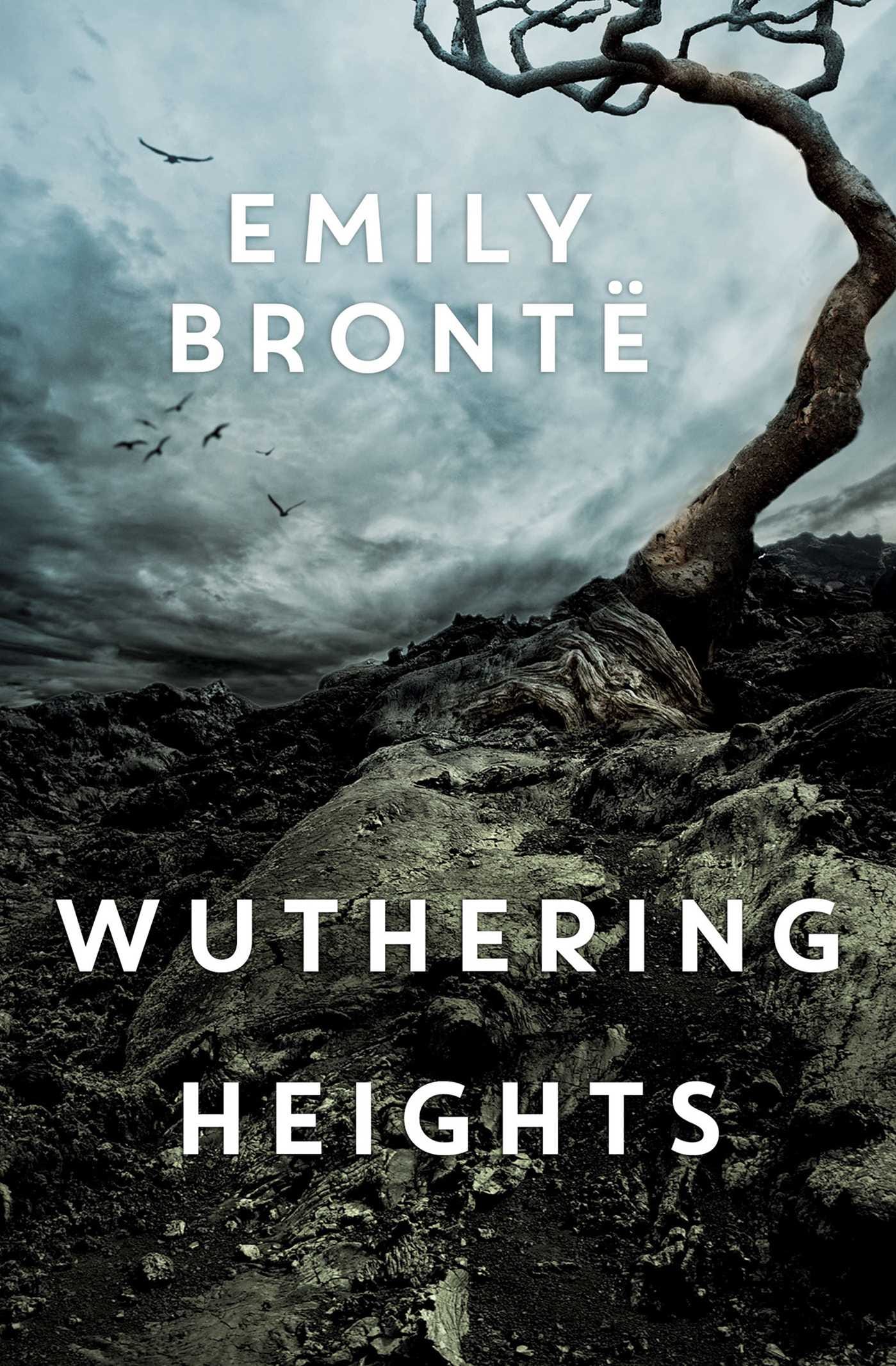
No sooner had I thought to write about this, than I noticed Jess at the aforementioned Unseen Review is doing a reread. Wuthering Heights is—my controversial opinion—by the most talented Bronte sister.
Emily wrote poems, and this one novel, and then died. The reason I prefer her writing (poems too) over the other Brontes’ is that it’s savagely passionate. Sex is barely mentioned—think of the time of publication—but it’s all over the pages.
In Cathy’s anarchic haunting of Heathcliff and his wild, moaning, desperate search for her out on the moor, of course, but also in the descriptions of gunsmoke-scented Hareton who tramps out of the fresh air and heather into the younger Catherine’s heart—and she’s passionate too; a milder version of her mother.
There’s also a vaguely sub/dom aspect of Catherine and Hareton’s relationship. For some reason, the scene where, seated beside the fireplace, Catherine (bites own hand) teaches a mardy Hareton to read. It’s giving fragile male ego, but it’s also giving eros. Boy, sexuality was, and is, so confusing before, and after, feminism.
Other notes: medium length; set in North England; ‘wuthering’ refers to the sound of the wind.
1900s
The Age of Innocence by Edith Wharton
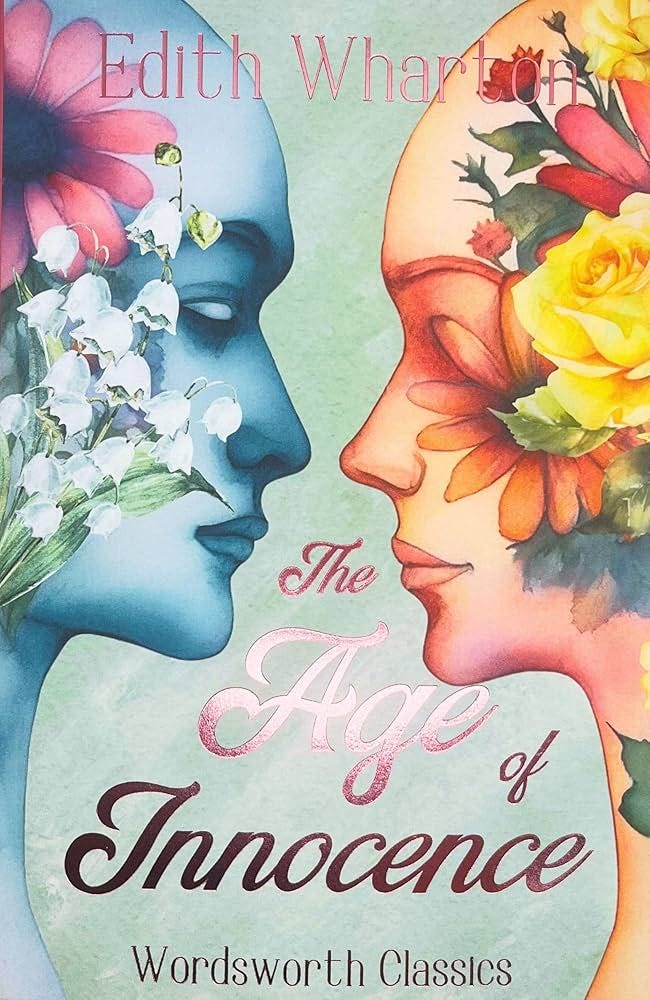
I used to think old books and films would feel old. I learnt by reading and watching classics that, indeed, some are dated, however, those that alight on the truth of the human experience feel as relevant and present to me as any contemporary work.
In fact, The Age of Innocence seems more relevant now, in the age of social media, phones, and covid socialisation, than when I first read it, in or around 2010.
And yet, Edith wrote in her memoir that writing this novel represented, “a momentary escape in going back to my childish memories of a long-vanished America... it was growing more and more evident that the world I had grown up in and been formed by had been destroyed in 1914.”
Why do I think it captures something about the zeitgeist? The Age of Innocence is a social tragedy; a love story that struggles to happen because of the age’s societal norms. A wealthy man in 1870s New York is engaged to a woman who has not much else to offer but beauty and a similar amount of wealth and societal standing.
When her divorced and clever cousin appears, despite the values he holds, he falls for her. But propriety keeps him away—she is divorced (scandalous); he can’t break off his engagement (more scandal); what will Manhattan’s high society think? Etcetera.
His inability to compute his feelings or act on his emotions, due to norms of the time, call to mind contemporary headlines about people having less sex, rules of online dating, and maybe too much questioning about what is right, what is acceptable, what creates fallout, as we all deal with the fact that we are watched and judged online by strangers.
The setting is incredibly interesting and, unlike in historical fiction, this isn’t a fantasy or based on research—the author grew up during the era in Manhattan and so this is a history of place and manners as much as it is a thoughtful novel with, basically, a will they-won’t they plot.
Other notes: won the Pulitzer(!), deals in restraint versus passion, medium length, cosy, Wharton’s family (the Joneses of Manhattan) are rumoured to be the family referred to in the phrase, ‘keeping up with the Joneses’.
2010s
Goodbye Vitamin by Rachel Khong
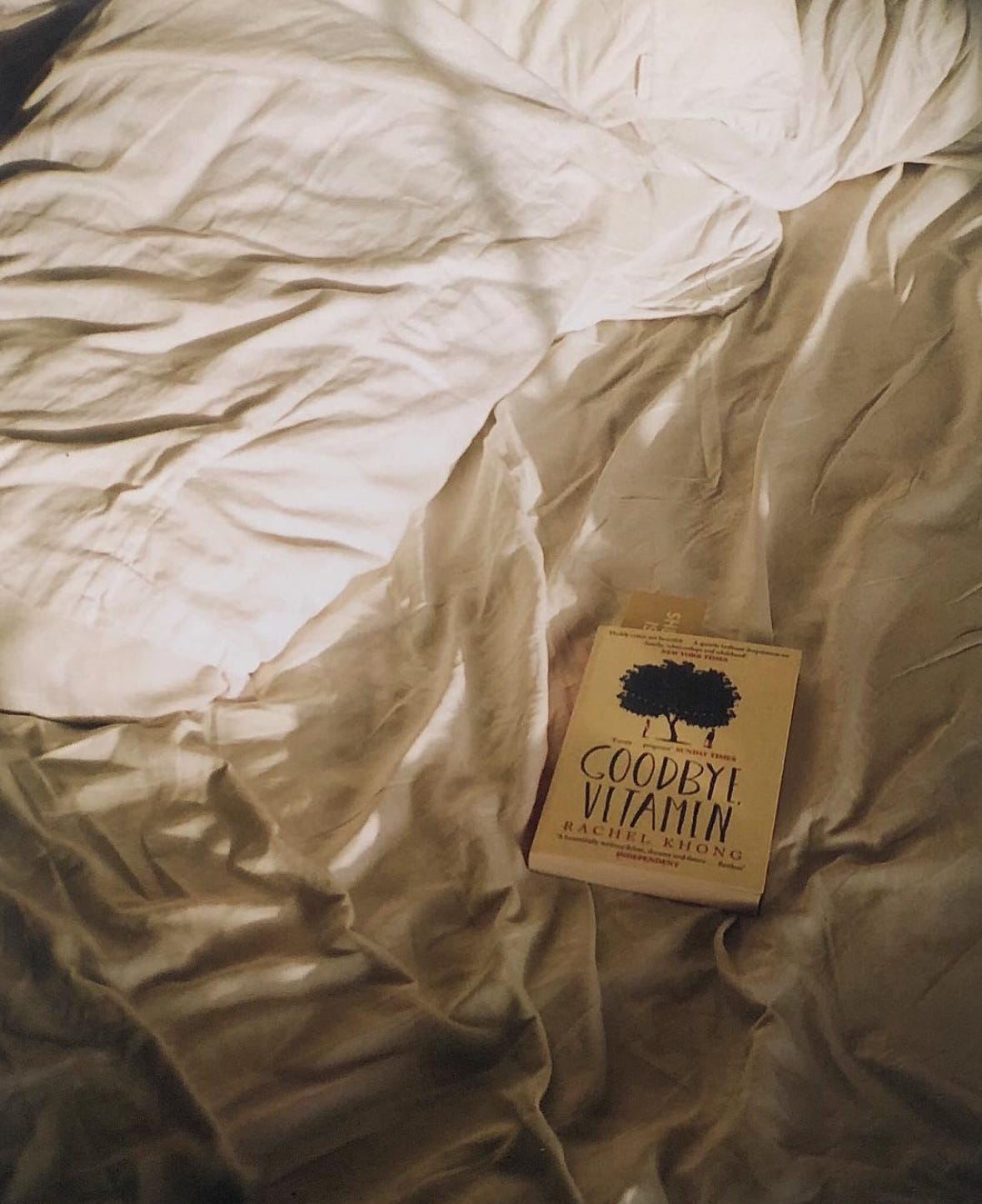
This book has stayed with me through the years. I’ve always thought it was a very special book.
Like many authors, Khong went for it in her second novel, Real Americans, i.e. wrote a much more sweeping book which sought to accomplish more things. Im sure some of you have read and loved Real Americans. It was really well reviewed. I can’t believe I actually haven’t read it yet, but I see the release date is 2024, and I had a period of years, coinciding (obviously) with baby loss and covid, where I didn’t read much fiction at all. It was like I could not compute fantasy worlds because I didn’t live it one. I lived in a very real, dark place, as many of us did during the pandemic. So, if any of you have read this, please tell me what you thought of it in the comments below 👇
Back to Goodbye Vitamin. I wanted to say that Real Americans is a big book (word count 119,000), and like many authors, Khong wrote a short, sweet, more contained first novel (word count 49,000). (Me too.)
The novel follows an Asian-American woman called Ruth, who moves home temporarily when her father receives a diagnosis of dementia. That’s really all you need to know. It was perfect. I know, if I had written this, I would feel I had achieved what I set out to do, and I’d be satisfied with the result. I hope Khong feels that way.
I reviewed this, back when I was originally posting film photography of books to Instagram, so I’m going to share with you my original thoughts (and oddly enough I read it around this time of year)—
“Goodbye Vitamin kicked off my holiday season, put me in such a good mood, and popped like a curved-edged, sugar-coated pill. Thank you so much, Rachel Khong. You did in such a small space what few achieve in any space. And you spoke about memory and family and moments aka, all that is valuable and what alone is valuable. I lost my Nan last month and we were very close and I spent a lot of time with her after her dementia diagnosis and you could have called it “taking care of her” but it was also “spending time with her” and as much as it was a shock it was also a gift. This is what you captured so beautifully and understatedly in GV. And I loved Ruth. I wished I were her, or that she was my friend or lover.”
Early 2020s
Of Women and Salt by Gabriela Garcia
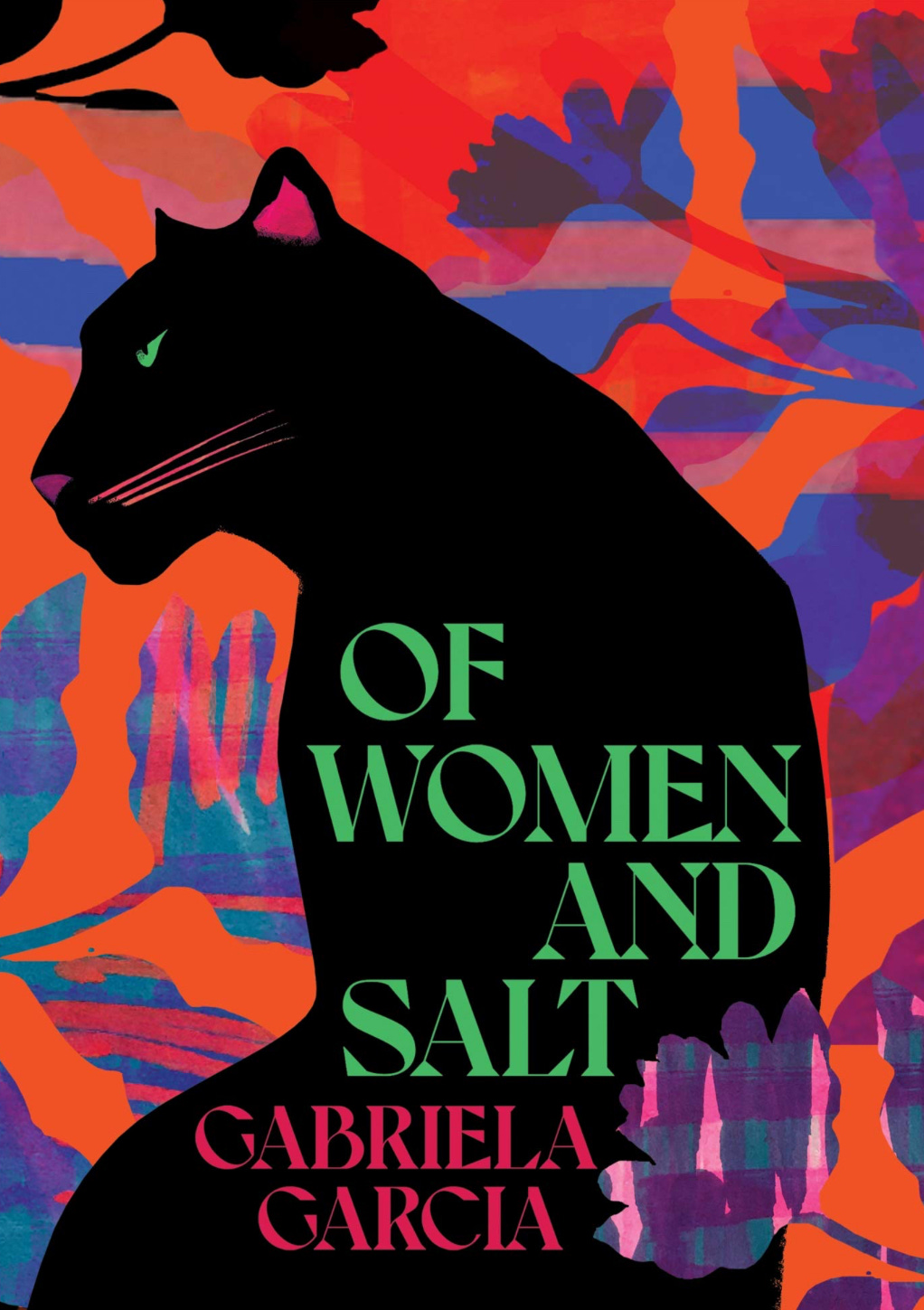
Who else here is hot for structure? Warm for form? Jazzed about juxtaposition?
Structure is what I loved most about this book, although (this is a theme of my literary taste), again, the setting is intriguing.
This novel opens in a factory in Cuba, where somebody is reading the workers Victor Hugo’s letter to Cuban independence leaders, as they roll cigars. Maria Isabel is the only female worker.
Shortly after this scene, her life is changed by the start of what will be many years of fighting for freedom from Spanish rule.
Since AI companies have stolen from me so much in recent years (I’m getting a pay out from a class action soon!), I’ll paste the Google AI description of the structure here—
“The novel is a multi-generational saga that jumps between different time periods and characters, weaving together a complex family history.”
It jumps forward in time to Miami, where Jeanette is taking care of Ana, whose mother Gloria has been detained by ICE, and Jeanette’s mother Carmen, from Cuba, will not discuss her past.
There’s a theme of how Cuban and immigrant women in the US are tossed around on a sea of circumstance, unable to gain purchase on their lives.
But my favourite thing, as I mentioned, was the structure, and how telling stories in small, detailed ways, juxtaposed with other intimately told stories, could uncover a larger picture which would not be revealed without intimacy or juxtaposition.
Let me know what you thought about these books, or if you think you’ll read them, below in the comments!—Abby xo
Thank you for taking the time to read my writing. If you enjoyed this post, felt like it spoke to you in some way, please share it via the button below or leave a comment. I really appreciate the support and your continued readership.
Buy my novels from independent bookshops here.
Find me on Instagram.
It's funny you should mention revisiting old literature, for some very strange reason I've been doing this exact same thing. I see it as a chance to substitute screens full of dross with say the simple magnificence of Hemmingway (as you suggest) for a new, previously lay audience. I think it may trigger a literature revolution.
Thanks very much for the mention. I love this idea for a series – look forward to reading future instalments!